
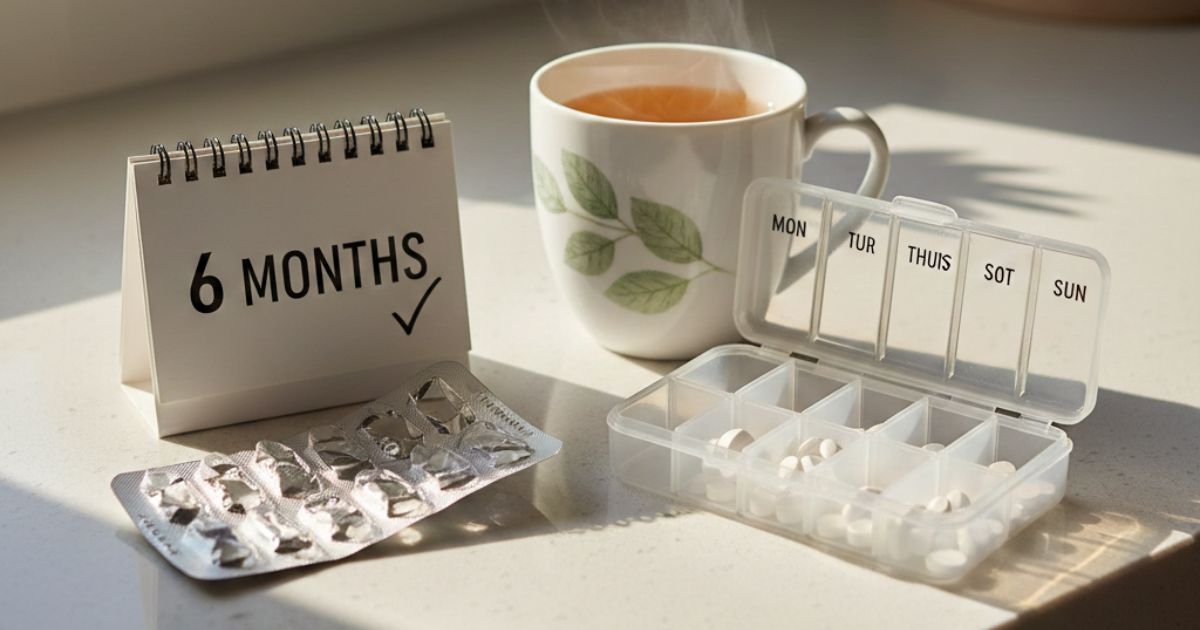
Six months smoke-free is a huge deal. You’ve rebuilt routines, quieted cravings, and proven—day after day—that you can live well without cigarettes. This checkpoint is about celebrating your progress and transitioning off varenicline (Chantix) safely, while keeping the rest of your treatment plan strong so your momentum continues.
Rewards aren’t optional; they train your brain that smoke-free living leads to good outcomes. Do something visible with the savings you’ve banked—upgrade your running shoes, book a mini-trip, enroll in a class you’ve been eyeing. Share your 6-month streak in the Qwitly community or with your support circle. Saying “I’m six months smoke-free” out loud reinforces your non-smoker identity.
Most quit plans complete six months of varenicline. Your Qwitly clinician will confirm the timing and approach for you.
General guidance (always follow your doctor):
If you feel anxious about losing a “safety net,” that’s normal. You’re not starting over—you’re graduating a tool that did its job.
If you’ve been using prazosin for sleep or early-quit anxiety, your clinician may recommend stopping around month six as well. Typical guidance:
Report any unusual rebound (e.g., persistent nighttime restlessness) so your clinician can adjust the plan (sleep hygiene, timing tweaks, or short-term alternatives).
Bupropion remains in place through month 12, typically morning + mid-afternoon dosing. It helps stabilize mood and lower the risk of stress-triggered smoking while the brain’s reward circuits keep normalizing. Set fresh phone alarms and keep your seven-day pill organizer filled—consistency is your best relapse insurance in months 6–12.
It’s common to feel a flicker of worry when a medication ends. Try this three-step reset:
If anxiety lingers, schedule a brief Qwitly check-in for reassurance and practical tweaks.
Keep the simple anchors you used to get here—boring on purpose, powerful in practice:
Anchors don’t argue with cravings; they outlast them.
Months 6–12 are about precision, not intensity. Refresh your quick responses:
Scripts remove debate in the moment you need clarity.
By six months, you’ll likely feel and see:
Capture a simple before/after: “What I can do now that I couldn’t at Day 0.” Evidence beats nostalgia.
Set a 90-day goal to carry you to Month 9:
Small, specific goals keep motivation fresh without adding pressure.
You’re not losing support—you’re refining it. With half a year behind you, your identity and routines are strong. Next in Quitting 101: Part 16 – Months 7–9: Life After Chantix—Staying on Track With Fewer Meds.


Qwitly is a technology platform provided exclusively for licensed clinics and healthcare providers. Qwitly itself does not provide medical advice, clinical services, or healthcare directly to patients. All clinical decisions, medical treatments, and prescriptions are provided solely by the independent healthcare professionals and clinics utilizing this platform. Qwitly assumes no responsibility or liability for any medical care or clinical advice delivered through its platform. Patients should always seek clinical guidance and direct consultation from their healthcare providers.
7800 I-10 STE 624, San Antonio, TX 78230







.png)